Thursday, December 16, 2010
sapientia tide
the english church differs slightly from the roman church in having a novena before the nativity, as it were, instead of an octave. so the first of the great "o" antiphons, "o sapientia," is sung on the evening of the 16th rather than on the 17th. i love this idea of a "sapientia tide," as it is titled in some of the old prayer books. of course those of us who do not even follow the office know the great o's from the the advent hymn, "o come, o come emmanual."


Friday, December 3, 2010
sacred geography of the ozarks

if i ever leave my little apartment in eureka springs, it will be to go back to the center of the world, at least of the ozarks. it's much closer than tibet, but to me at least just as awe full. surely this is none other than the house of god, and this is the gate of heaven. and perhaps that unavoidable realization is why so many of my ancestors called their settlements and little methodist churches bethel.
Monday, October 18, 2010
the feast of st. luke
 there is no end to what could be said about the evangelist luke. i liked this icon because of the sandals. i who walk a bit, have been wondering what it must have been like for luke as he wandered around, mostly on foot, seeking the sources for his gospel.
but i am most thankful, i think, for the wonderful poetry that is preserved in the gospel according to luke alone. i found this recording of a very traditional english singing of the benedictus, for instance. but luke's writings have continued to inspire musicians and writers long after st. jerome and the scholars of the douay-rheims bible. i also found a very contemporary guitar song inspired by the same poem.
Tuesday, October 5, 2010
what's it all about: an answer from celtic monasticism

this is often either confusing or ignored, especially in our time of "separation of church and state." s. peter's admonition in his first epistle, "submit yourselves to every ordinance of man for the lord's sake: whether it be to the king, as supreme; or unto governors, as unto them that are sent by him for the punishemnt of evil-doers, or for the praise of them that do well," is either found confusing or over-rated. yet throughout most of history since constantine, there has been some sort of understanding that the the state, however it is organized, has a role in promoting morality. we often hear today that "morality cannot be legislated." of course it can. all legitimate laws, whether they are prohibiting murder, and setting sentances for the murderer, or controlling traffic, so one is less likely to commit vehicular homicide, are legislating morality.
but morality is not, despite what one hears so often these days, is not the ultimate goal, the essence, of christianity. if religion is, as i suggest, what ties all the different parts of one's life together--the literal meaning of the word--then it might be the goal of some religions: both islam and many protestant sects seem close to that understanding.
religion as it is revealed in the person of jesus christ has a different goal, however. morality is of course required. one can almost say it is assumed. but the purpose is to know god the father, as he is revealed by jesus christ his son. and that is the amazing thing about celtic monasticism, if kathleen hughes and ann hamlin are right in their slender book, celtic monasticism: the modern traveler to the early irish church (new york: the seabury press, 1981). they suggest that celtic monasteries were founded to make that goal easier for all the members of the society.
"there is," they say, "no complete philosophy of the monatic life in early irish records, but if the sermons attributed to columbanus are really by him they provide the fullest early statement. . . . the monastic life as he sees it is for contemplating and practising the presence of god. for him jesus is the joy of man's desiring, and to long for god is greater bliss than any worldly pleasure, any earthly fulfilment: 'taste and see,' he says, 'how lovely, how pleasant is the lord. . . . may no one and nothing separate us from the love of christ . . . that we may abide in him here' and for ever." (p.1)
i need hardly mention how different this way of organizing society is from what is most common in the time of our "contemporary psychosis," as thomas merton calls it. but that life is always available, even if it means turning off the television, turning away from the call of the mall and the gladiatorial fights of monday night football. indeed, as our lord says, it is at hand.
Thursday, September 16, 2010
back under the giubhas

it has been a week of catching up, so to speak: visiting my favourite springs and caves; pulling the strange plants that i probably seeded myself in my little garden but which seem much too tall for such a small place; waking early to hear the blackbird speak that morning has broken; and reading about saints and seasons that i missed while wandering in the northwest.
this morning i read tess ward's book the celtic wheel of the year, and i was intrigued that she mentioned something about this time of the year that i always notice, but have never known whether was shared by others. august always brings a feeling to me of deep nostalgia. this strikes me as a bit strange, because it is the time of high summer and bright, varied greens. but it is also the beginning of the harvest. lammas/lughnasadh starts us on the cycle of feasts which climax at the day of the dead/samhain. as the prayer book burial service begins, "in the middle of life we are in death." ward has the insight that demeter not only goes looking for persephone, her daughter, but also for the person she once was herself (p. 161-162). i have come back to my little cell in the pines to find again the same self that wandered for three months, now at home.
although i am happy to have finally accepted that self, the old grey-headed hermit/scholar, it is also the time of the fall ember days, when i must consider how that old hermit is doing. i find, in the words of what is perhaps the most-quoted poem of the twentieth century, that ". . .the end of all our exploring/will be to arrive where we started/and know the place for the first time."* always we begin again.
september is the beginning of the orthodox church year. the gospel readings are stories of our lord's resurrection. how wonderful to consider that in the midst of death, there is resurrection. i will spend this afternoon, i think, planting seeds.
Tuesday, August 10, 2010
ascension peregrinations

my posts have been few lately, because i really have been peregrinating (wandering around): port angeles and the olympic peninsula; victoria, british columbia; seattle; and now bellingham and its environs. last week a few good friends and i celebrated the feast of the transfiguration on sehome hill, our own little local mt. tabor.
it was a wonderful celebration, with glory from generation to generation in the church, (ages 10 months to 64 years), a chrismation, the liturgy, first fruits of several delicious sorts. we reflected on how appropriate a time this feast is for a chrismation, in which each christian is actually christed and sent into the world to show the glory of christ to all she or he meets. and we wondered what we would meet when we came back down onto the plain below.
the dark satanic mills in the picture above are being dismantled now, not because we are really creating jerusalem on whatcom's green and pleasant land, but because it's cheaper to make toilet paper in china.
perhaps we did not meet individually the son tormented by daemons at the bottom of the hill, although he lives there, sleeping in apartments with windows covered with posters for rock bands whose names seem to be compounded from words chosen for their hopeful offensiveness, "hanging" on the corners of railroad avenue, waiting for his next fix. we do not meet him, that son (or her, that daughter) because they are legion and we no longer see them. they have become the wallpaper of our modern madness.
before we went up sehome hill, i spent an hour on the campus of western washington university trying to see each of the hundreds of people who walked by as the icon of god they have been created to be. i confess, it was very hard. now, in some cases i suspect that is because their icon is pretty dirty, covered with the garbage of the sin of the world. but it is also hard because i walk around in my sleep most of the time. i do not see christ in my sisters and brothers or anywhere. i need to wake up to see christ only. pray my peregrinations will not be sleep walking.
Monday, July 19, 2010
"manfully to fight under [christ;s] banner, against sin, the world, and the devil
i looked early this morning at my e-mails to see if there were a report on the health of archbishop richard gundrey. there was, and it was good: he is home from the hospital and recovering well.
there was also this question: "what's your assessment of c.s. lewis these days, on his own merits and also in light of what's happened with fantasy literature since then . . . ? and george macdonald?"
i found it a helpful question, and i'm sharing my reply with whomever reads this blog:
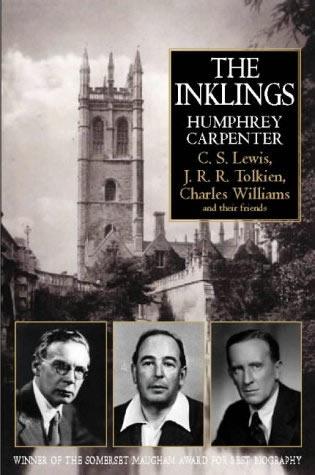
ah, lewis & macdonald. your question comes at an appropriate time. my beach book is the once and future king. i only a few months ago read the inklings, which i found quite fascinating, and a good background for that hideous strength and perelandria, which i read soon thereafter. (i confess i have never read any of macdonald's works, but have been very impressed with charles williams; i read two of his novels from interlibrary loan, and want very much to find his poetry. if you have read that hideous strength then you know it's (and very much the inkling's) understanding that there is always a battle between england and albion--much like gurdjieff's wolf and lamb.
what most impresses me about lewis and the others of inklings is the quality of their dialogue, and that they most successfully expressed it in narrative. (lewis' four loves, for instance, although a wonderfully eradite (sp?) exposition, is wrong insofar as how greeks actually used their four words for love; but his descriptions of the ways of loving in perelandria is insightful anyway.) and of course central to their discussion was a consideration of the nature of the good and the existence and substance, if any, of evil. i was very disappointed but not surprised while being a fly on the wall yesterday at the adult forum at st. andrew's here in port angeles to hear adult churchmen who had no vocabulary to discuss this problem except that of the tabloids.
but fantasy literature also provides a vocabulary. evil does not go away if we ignore it. perhaps the screwtape letters is lewis' book which we most need. even if evil and our role to oppose it never comes up in today's pulpits in any way except that perhaps we should choose a good emperor, we know in our bowels that we are in a struggle. enter dowling, with whom you are much more familiar than i, who have only seen a few of the movies made from her books.
these books seem almost an affirmation of jung's collective unconscious, and a suggestion that if the church does not address such issues, or if the church is excluded from the public discussion of such issues, then they will be discussed without the church.
my question to you, . . . is why you are asking this question now, and whether the fantasy literature tends to portray magic in the way it is used by simon magus in the acts of the apostles and in the acts of peter?
one might suspect the current understanding of evil and our role in opposing it is probably well represented in the baptism and confirmation rites of the bcp 1979. still included are the traditional renunciations in the baptismal office, left there probably because the old fogies, bless their hearts, would not let them be removed; but the real center of it is the wonderfully pelagian baptismal covenant, which as . . . . a visitor from england [to eureka springs] . . . a few years ago noticed, is quite new. in the confirmation office and in the reaffirmation of baptismal vows, evil is hardly spoken of--not i think in the way that lord voltimor (sp?) in the harry potter books is not spoken of, but as a sort of anachronistic remnant from medievalism --while our vows are center stage again.
well. you've provoked me to write an essay before breakfast again. it's good to be provoked in such a way, one suspects. whatever lewis' faults, one cannot accuse him of not taking his baptism seriously, even though his self-identity as a christian first probably kept him from promotion at oxford.
Subscribe to:
Posts (Atom)